

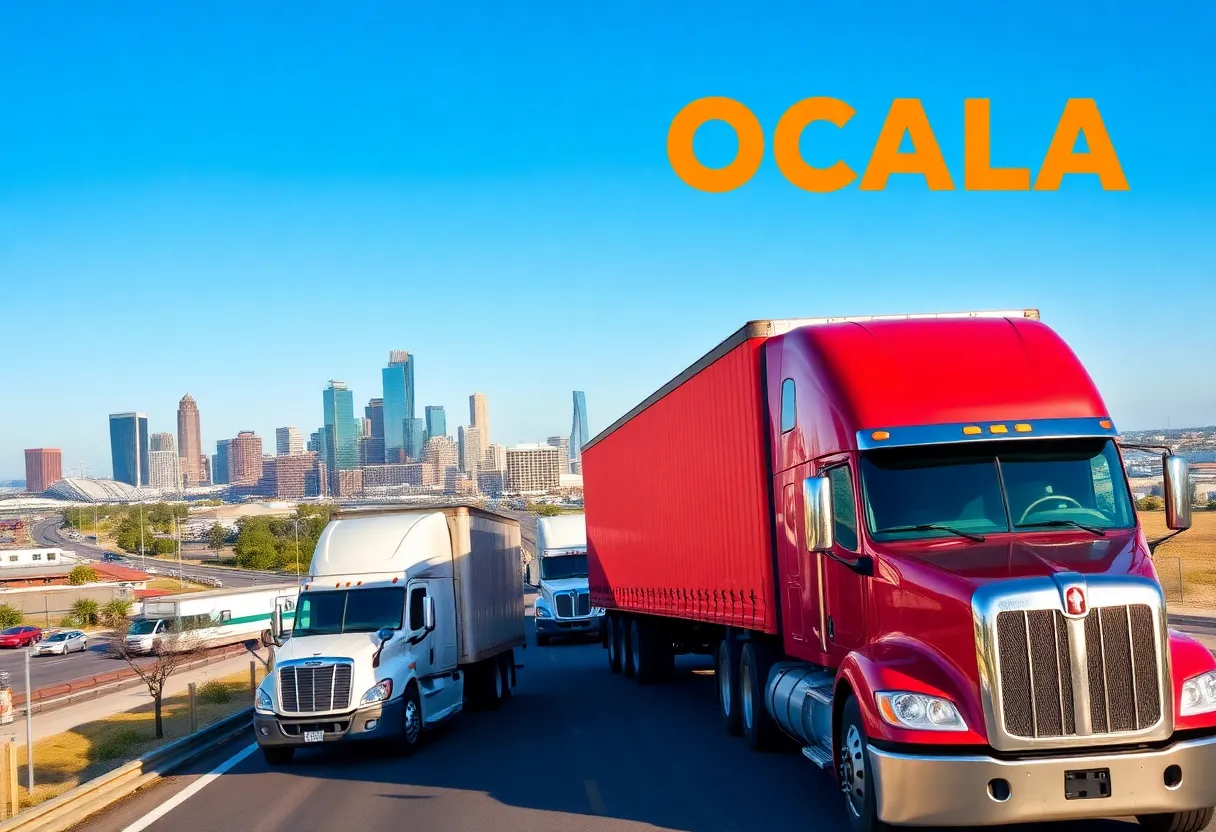
Dallas-Fort Worth, Ocala, January 6, 2026
The U-Haul Growth Index has recognized the Dallas-Fort Worth-Arlington area as its top growth metro for 2025, with Ocala, Florida named the leading growth city. This reflects a strong trend of migration towards Texas and Florida, showcasing the regions’ appeal for newcomers seeking economic opportunities. The results, based on over 2.5 million U-Haul transactions, provide insights into migration patterns and the resilience of local economies driven by small businesses.
U-Haul Names Dallas-Fort Worth and Ocala Top Growth Areas for 2025
The latest U-Haul Growth Index indicates strong migration trends in Texas and Florida
Philadelphia, PA – The U-Haul Growth Index has recently revealed its top growth metropolitan area and city for 2025, showcasing remarkable patterns of migration and the increasing magnetism of certain regions. For the second consecutive year, the Dallas-Fort Worth-Arlington metropolitan area has secured the top spot, while Ocala, Florida, has emerged as the leading growth city, marking an impressive third time in four years. These trends reflect significant shifts in where people are choosing to live and invest their resources.
The U-Haul Growth Index serves as a notable indicator of migration trends—calculating the net gain of one-way customers across various regions. Understanding how communities attract new residents can offer insights for local governments, small businesses, and entrepreneurs in shaping the economic landscape and reinforcing community resilience.
Top Growth Metros: A Closer Look
The U-Haul Growth Index ranks metropolitan areas based on the net gain of one-way customers each year. For 2025, the top ten growth metros include:
1. Dallas, TX
2. Houston, TX
3. Austin, TX
4. Charlotte, NC
5. Phoenix, AZ
6. Nashville, TN
7. Charleston, SC
8. Raleigh, NC
9. Atlanta, GA
10. Brownsville & McAllen, TX
Texas metropolitan areas lead this list, demonstrating the state’s ongoing appeal. With cities like Houston and Austin following Dallas, this trend reflects how limited regulation and entrepreneurial innovation have fueled economic expansion in the region. In particular, Texas’s robust job market and favorable business climate serve as magnets for migrants seeking new opportunities.
Ocala Steals the Spotlight
Ocala, Florida, retains its title as the top U-Haul growth city for 2025. Along with Ocala, other Florida cities such as North Port, Myrtle Beach, and Kissimmee have shown significant net gains in one-way customers. This trend showcases Florida as an attractive destination for individuals and families looking for vibrant communities with ample opportunities for growth and personal achievement. The state’s favorable climate and economic landscape continue to play a decisive role in drawing new residents, highlighting the power of business-friendly policies.
What Influences Growth?
The U-Haul Growth Index compiles data from over 2.5 million annual one-way transactions across the U.S. and Canada. By examining the net gain or loss of customers who rented moving equipment, the index provides valuable insights into migration patterns and how effective regions are at attracting and retaining residents. Although these rankings may not directly correlate with overall population growth, they effectively highlight several regions’ attractiveness and livability.
The Importance of Small Business Resilience
The data from the U-Haul Growth Index reinforces the notion that small businesses play a crucial role in driving local economies. As cities and regions expand, local entrepreneurs often rise to meet the needs of new residents, fostering innovation and economic activity. Support for small businesses, particularly in rapidly growing areas, should remain a priority to sustain economic momentum.
Furthermore, communities that embrace limited regulation and promote an entrepreneurial spirit are generally more successful in attracting newcomers. Regions that prioritize small business success can develop a more sustainable economic future.
Key Takeaways
The U-Haul Growth Index for 2025 paints a vibrant picture of migration and economic potential in selected areas of the United States. Key growth features include:
– Top Growth Metro: Dallas-Fort Worth-Arlington metropolitan area
– Top Growth City: Ocala, Florida
– Dominant States: Texas and Florida
– Notable Trends: Strong presence of Texas metros in top rankings; Florida’s dominance in city growth
These insights underline the importance of adapting to migration trends and supporting local commerce as communities evolve and expand.
Conclusion
The U-Haul Growth Index for 2025 underscores the vitality and resilience of select metropolitan areas and cities in the U.S. Entrepreneurs and small business owners stand at the forefront of this transformation, poised to harness the growing demand for opportunities and services. As Philadelphia and other regions consider their own paths toward growth, encouraging local business development can ultimately enhance economic prospects for all.
Supporting local businesses means investing in the future of our communities. Let’s all continue to promote entrepreneurship and innovation, ensuring vibrant economies for generations to come.
FAQ
What is the U-Haul Growth Index?
The U-Haul Growth Index is a ranking system that evaluates the net gain or loss of one-way customers in various states, metropolitan areas, and cities across the U.S. and Canada. It is based on over 2.5 million annual one-way transactions involving U-Haul equipment.
How are the rankings determined?
Rankings are determined by calculating the net gain or loss of customers who rented a one-way truck, trailer, or U-Box moving container in one location and dropped off their equipment in another. This metric reflects migration trends and the ability of regions to attract and retain residents.
Which states and cities are leading in the 2025 rankings?
In 2025, Texas leads as the top U-Haul growth state, with Dallas, Houston, and Austin as the top three growth metros. Florida dominates the growth cities list, with Ocala, North Port, and Kissimmee leading the top ten.
How does the U-Haul Growth Index relate to population growth?
While the U-Haul Growth Index provides insights into migration patterns, it may not directly correlate with population or economic growth. However, it serves as an effective gauge of how well regions are attracting and maintaining residents.
Where can I find more information about the U-Haul Growth Index?
More detailed information and past reports can be found on U-Haul’s official website under their migration trends section.
| Key Features of the U-Haul Growth Index 2025 | Description |
|---|---|
| Top Growth Metro | Dallas-Fort Worth-Arlington metropolitan area |
| Top Growth City | Ocala, Florida |
| Dominant States | Texas and Florida |
| Notable Trends | Texas metros occupy the top three positions; Florida cities dominate the growth cities list |
Deeper Dive: News & Info About This Topic
HERE Resources

Author: STAFF HERE PHILADELPHIA WRITER
The PHILADELPHIA STAFF WRITER represents the experienced team at HEREPhiladelphia.com, your go-to source for actionable local news and information in Philadelphia, Philadelphia County, and beyond. Specializing in "news you can use," we cover essential topics like product reviews for personal and business needs, local business directories, politics, real estate trends, neighborhood insights, and state news affecting the area—with deep expertise drawn from years of dedicated reporting and strong community input, including local press releases and business updates. We deliver top reporting on high-value events such as Mummers Parade, Philadelphia Flower Show, and Thanksgiving Day Parade. Our coverage extends to key organizations like the Greater Philadelphia Chamber of Commerce and United Way of Greater Philadelphia, plus leading businesses in telecommunications, food services, and healthcare that power the local economy such as Comcast, Aramark, and Children's Hospital of Philadelphia. As part of the broader HERE network, we provide comprehensive, credible insights into Pennsylvania's dynamic landscape.