
News Summary
The University of Pennsylvania has revised its Open Expression Guidelines to better accommodate the evolving nature of student protests on campus. These updates aim to balance the right to free expression with safety and orderliness, providing clearer frameworks for demonstrations while reflecting the university’s commitment to proactive engagement with changing protest dynamics. The revisions also align with broader institutional shifts, including limiting public statements on unrelated events, ensuring focused communications relevant to university operations.
Philadelphia
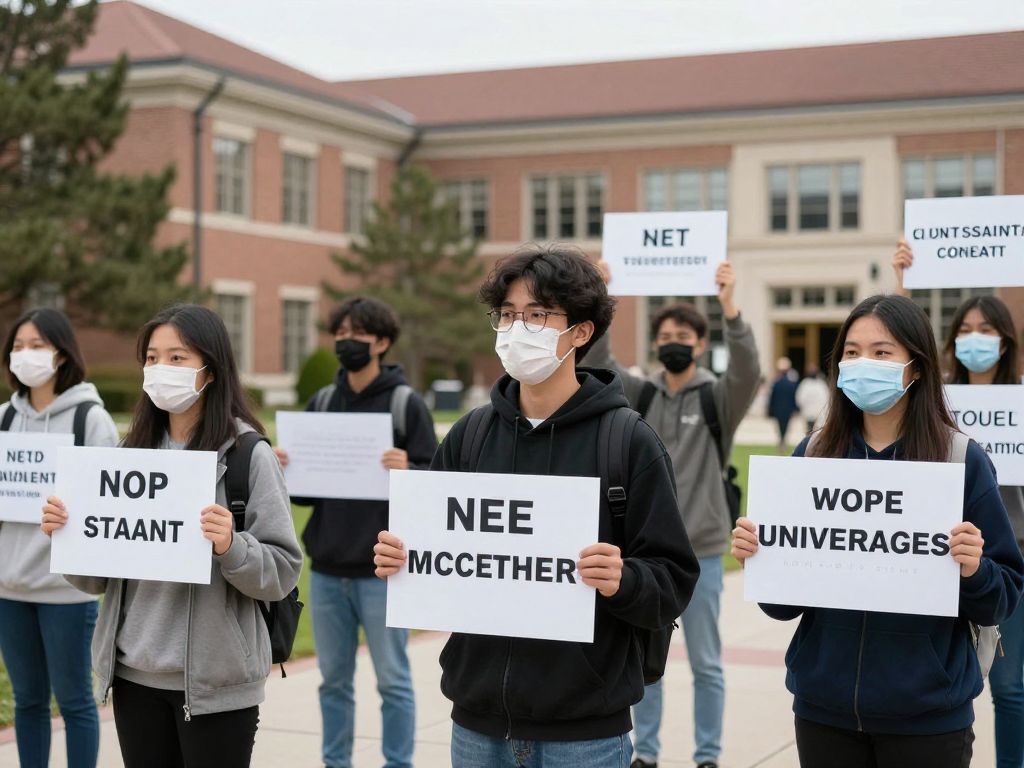
The University of Pennsylvania’s Open Expression Guidelines, designed to regulate student protests and ensure demonstrations adhere to campus rules, have undergone significant evolution in response to changing protest dynamics. These guidelines aim to balance the right to free expression with the need to maintain an orderly and safe campus environment for all members of the university community.
The updated guidelines reflect a proactive approach by the university to adapt to how demonstrations are now conducted, ensuring that students can express their views effectively while staying within established boundaries. The review and revision of these guidelines come as protests at Penn have evolved, necessitating clearer explanations and updated regulatory requirements.
Evolution of Protest Regulations
The changes to Penn’s Open Expression Guidelines are part of a broader trend of universities re-evaluating their policies on campus demonstrations. The guidelines are specifically meant to provide a framework for how student protests should be conducted on campus. This includes ensuring that demonstrations are carried out in a manner that respects the rights of others and does not unduly disrupt university operations or the academic environment.
These developments occur concurrently with other institutional shifts, such as Penn’s decision to limit public statements on local and world events that do not have a direct impact on the university. This move, initiated in September 2024, signals a strategic effort by the university to focus its official communications on matters directly pertaining to its core mission and operations.
Purpose of the Guidelines
The Open Expression Guidelines are foundational to upholding both the right to protest and the responsibility to maintain community standards. They serve as a crucial tool for university administrators and students alike, offering clarity on acceptable conduct during demonstrations. The guidelines aim to ensure that while voices can be heard, the expression does not infringe upon the rights or safety of others within the university community.
The necessity for evolving these guidelines stems from the changing nature and frequency of protests observed on campus. As demonstrations adapt in their form and intensity, the regulatory framework must also evolve to remain relevant and effective in managing these events responsibly.
Broader Regulatory Context
Beyond the university’s specific policies, there are broader regulatory frameworks that influence how institutions like Penn operate within Pennsylvania. For instance, the Pennsylvania Municipalities Planning Code sets standards that could, in some contexts, relate to public gatherings and land use, although this is more generally applied to municipal planning rather than direct university protest regulation.
Similarly, the Regulatory Compliance Guide for facilities like personal care homes in Pennsylvania provides clearer explanations of regulatory requirements, highlighting the state’s broader emphasis on adherence to established codes, such as 55 Pa. Code Chapter 2600. While not directly linked to protest guidelines, these state-level regulations underscore a general environment of compliance and clear operational frameworks.
State-level consumer guides, like the Consumer Guide to Tenant and Landlord Rights, also exist to help residents understand their rights and responsibilities, demonstrating a commitment to clear regulations and guidance across various aspects of life in Pennsylvania.
Furthermore, the importance of protective services, such as those detailed in Title 23 – DOMESTIC RELATIONS – Chapter 63 regarding abused children, emphasizes the legal and ethical frameworks in place at the State-level to prevent harm and ensure safety within communities.
Recent Developments and Impact
The recent updates to Penn’s Open Expression Guidelines are a direct response to the university’s experiences with various forms of student activism. These changes are intended to provide a more robust and adaptable framework for handling future demonstrations. The university continues to navigate the complexities of free speech, ensuring that its policies are both fair and effective.
It is important for all members of the Penn community to be aware of these evolving guidelines, as they dictate the permissible conduct during protests and demonstrations on campus. Staying informed about these regulations ensures that participants can engage in advocacy responsibly and effectively.
The university’s proactive stance in updating these guidelines reinforces its commitment to fostering an environment where dialogue and expression can occur constructively, without compromising the safety and operational continuity of the institution. These efforts are crucial in maintaining a balanced approach to free speech on a university campus.
The evolution of these guidelines is a dynamic process, reflecting ongoing societal shifts and specific campus events. The university’s commitment to regularly reviewing and adapting its policies helps ensure they remain relevant and effective in addressing the diverse forms of expression that manifest on campus.
Frequently Asked Questions
What are Penn’s Open Expression Guidelines?
Penn’s Open Expression Guidelines are designed to regulate student protests on campus and ensure demonstrations are conducted within established boundaries.
Why have Penn’s Open Expression Guidelines evolved?
Penn’s Open Expression Guidelines have evolved in response to changing protest dynamics and the need for updated regulatory requirements to manage how demonstrations are conducted.
When did Penn decide to limit statements on local and world events?
Penn decided to limit statements on local and world events in a move toward a more focused communication strategy in September 2024.
What is the Pennsylvania Municipalities Planning Code?
The Pennsylvania Municipalities Planning Code (State-level) is a regulatory framework designed to allow for the development of fully integrated, mixed-use pedestrian areas and to benefit those who need homes.
What is the Regulatory Compliance Guide for facilities in Pennsylvania?
The Regulatory Compliance Guide (State-level) provides clearer explanations of the regulatory requirements of 55 Pa. Code Chapter 2600 to help personal care home operators.
Key Features of Penn’s Protest Guidelines
| Feature | Description | Scope |
|---|---|---|
| Purpose | To regulate student protests and ensure demonstrations are conducted within campus rules. | University |
| Evolutionary Nature | Guidelines have evolved in response to changing protest dynamics and the need for clearer explanations. | University |
| Impact of University Statements | Penn will limit statements on local and world events that do not have a direct impact on the university (as of Sep 2024). | University |
| Related State-level Regulations | Context includes frameworks like the Pennsylvania Municipalities Planning Code and Regulatory Compliance Guide. | State-level |
Deeper Dive: News & Info About This Topic
HERE Resources
University of Pennsylvania Dismantles Last Major DEI Holdout
Faculty at Penn Criticize New Open Expression Restrictions
UPenn Clarifies Stance on Transgender Athletes in Women’s Sports
UPenn Title IX Agreement Serves as National Model
University of Pennsylvania Revises Research Misconduct Policy
University of Pennsylvania Research Reveals Individual Sleep Needs
Women’s Philadelphia Triathlon Expo Announced
Penn Researchers Awarded $25 Million Grant for Heart Health Study
Decline in Public Trust for CDC Amid Conflicting Vaccine Guidance
Philadelphia’s Free New Year’s Eve Concert Security Measures

Author: STAFF HERE PHILADELPHIA WRITER
The PHILADELPHIA STAFF WRITER represents the experienced team at HEREPhiladelphia.com, your go-to source for actionable local news and information in Philadelphia, Philadelphia County, and beyond. Specializing in "news you can use," we cover essential topics like product reviews for personal and business needs, local business directories, politics, real estate trends, neighborhood insights, and state news affecting the area—with deep expertise drawn from years of dedicated reporting and strong community input, including local press releases and business updates. We deliver top reporting on high-value events such as Mummers Parade, Philadelphia Flower Show, and Thanksgiving Day Parade. Our coverage extends to key organizations like the Greater Philadelphia Chamber of Commerce and United Way of Greater Philadelphia, plus leading businesses in telecommunications, food services, and healthcare that power the local economy such as Comcast, Aramark, and Children's Hospital of Philadelphia. As part of the broader HERE network, we provide comprehensive, credible insights into Pennsylvania's dynamic landscape.