
News Summary
Three faculty members from the University of Pennsylvania have voiced concerns over new temporary guidelines restricting campus events and demonstrations. They argue that the new rules undermine existing policies that protect open expression. Key criticisms include the lack of consultation with the university community and the introduction of significant limitations on forms of expression. Faculty members are advocating for transparency, proper consultation, and a review process regarding these guidelines.
Philadelphia, PA – Faculty Express Alarm Over New Open Expression Restrictions at Penn
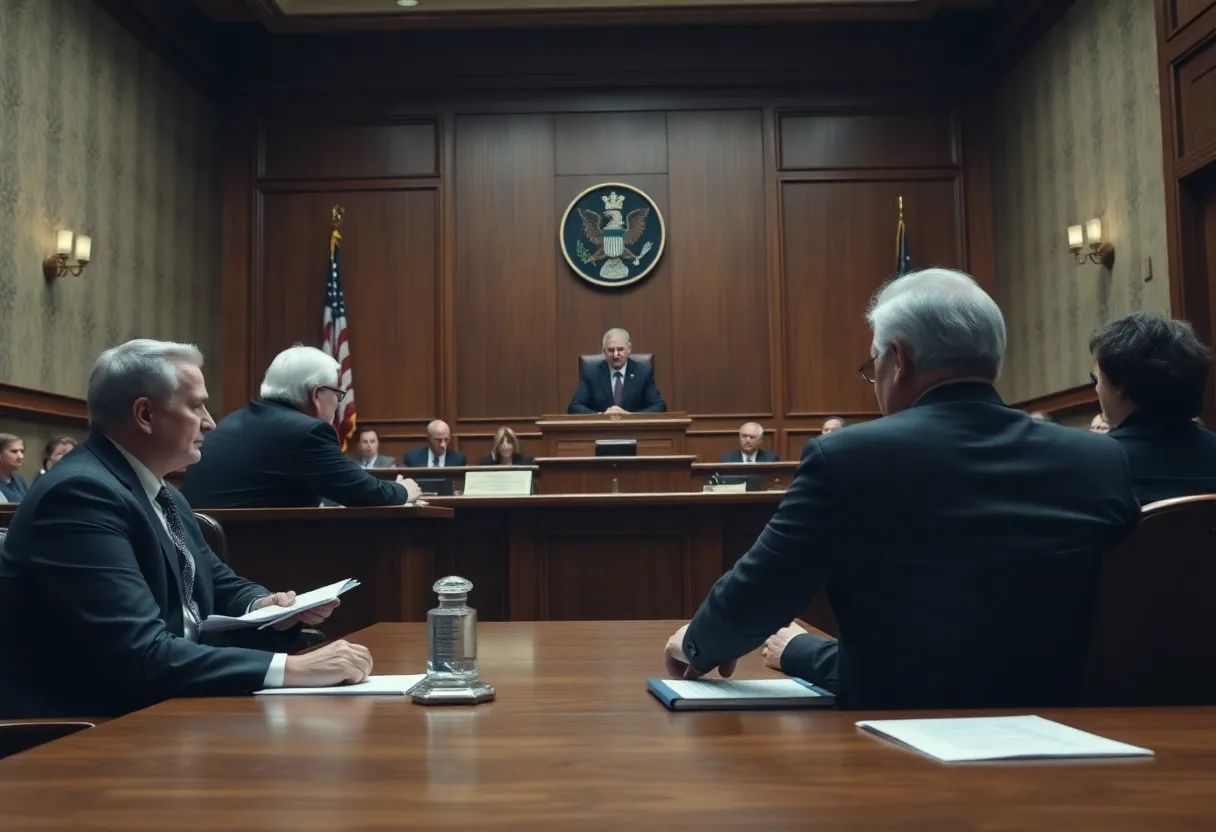
Three University of Pennsylvania faculty members, Carolyn Marvin, Diana Mutz, and Robin Pemantle, have publicly raised concerns regarding the administration’s implementation of new “Temporary Standards and Procedures for Campus Events and Demonstrations”, alleging a “stealth passage” of restrictions on open expression. These temporary rules, introduced in June 2024, are criticized for significantly altering the University’s long-standing Guidelines on Open Expression without adequate consultation with the Penn community.
Allegations of Undermining Established Open Expression Guidelines
The faculty members contend that the new Temporary Standards effectively “gutted many of the protections” previously afforded by the existing Guidelines on Open Expression, which were last updated in 1993. They emphasize that the administration issued these new restrictions without formal consultation from Penn faculty, staff, or students, bypassing the historical precedent for revising such policies. The original Guidelines, established in 1969, included the creation of an independent Committee on Open Expression (COE) with faculty, staff, and student members, whose involvement is crucial in any revision process.
Key Restrictions Introduced by Temporary Standards
The new Temporary Standards impose several significant limitations on campus expression. Organizers are now required to obtain permission from the administration at least two weeks in advance to speak on Locust Walk or other campus areas, with potential censure for non-compliance. Previously accepted forms of expression, such as sidewalk chalk, are now among the new violations. Projecting light onto building facades without explicit permission is also prohibited. Additionally, encampments and overnight demonstrations are explicitly banned in any University location, regardless of being indoors or outdoors.
Further restrictions include limitations on amplified sound, permitting it on College Green only between 5 p.m. and 10 p.m., and on Locust Walk solely between 12 p.m. and 1 p.m., with approval required and a complete ban during reading days and final exams. The standards also presume events to be private unless explicitly stated otherwise, thereby limiting participation primarily to Penn community members. Livestreaming is now restricted “except in limited circumstances where reaching a wider audience is appropriate and approved by the Vice Provost for University Life,” and news media may be asked to limit filming to specific campus areas during demonstrations. Building structures, walls, or barriers on University property without permission is forbidden, as are demonstrations in private residences, offices, and specific facilities like College Hall and its exterior steps. Climbing on or covering University sculptures and statues is also prohibited.
Concerns Over Process and Enforcement
The faculty members highlight that the University community has yet to see a draft of the new permanent Guidelines, despite indications from the provost that revisions have occurred since a February 2025 COE vote. The 2025-26 COE has not yet been constituted to approve a final draft. Critics also point to the vagueness of certain prohibitions, such as the failure to explicitly define “advocate violence,” which could lead to arbitrary enforcement. The timing of these new policies, following a period of increased protests, has raised concerns about viewpoint-discriminatory application. The new regulations are perceived as an attempt to curtail the rights of faculty, staff, and students to assemble, speak, and protest, activities considered fundamental to education and a democratic society.
University’s Stance and Faculty Demands
The University administration has stated that these updated guidelines respond to requests from the Penn community for “increased clarity” and were a “priority recommendation” from both the University Task Force on Antisemitism and the Presidential Commission on Countering Hate and Building Community. However, Marvin, Mutz, and Pemantle are calling for specific remedies:
- The proposed changes should be made public to all affected members of the University, including students, faculty, and staff.
- The Faculty Senate should appoint a 2025-26 Committee on Open Expression (COE) that is charged with revising any document it receives.
- A mandated open hearing for the community should be scheduled after the document is distributed, with any resulting revisions incorporated and publicly distributed before their final submission to the University Council.
Key Features of Penn’s Open Expression Policies
| Feature | Original Guidelines on Open Expression (Before June 2024) | Temporary Standards (Implemented June 2024) | Concerns Raised by Faculty |
|---|---|---|---|
| Consultation Process | Involved independent Committee on Open Expression (COE) with faculty, staff, and students. | Issued without formal consultation from faculty, staff, or students. | “Stealth passage” and bypassing of established procedures. |
| Permission for Speaking/Demonstrating on Campus | Generally more spontaneous expression. | Requires permission from administration at least two weeks in advance for locations like Locust Walk. | Bureaucratizing previously spontaneous expression. |
| Sidewalk Chalk | Considered an ideal way to produce political graffiti without vandalism. | New violation. | Suppression of a common form of protest. |
| Projecting Light on Building Facades | Not explicitly restricted in snippets. | Banned without permission. | Creation of new violations. |
| Encampments and Overnight Demonstrations | Not explicitly banned in snippets. | Prohibited in any University location. | Restriction on forms of nonviolent mobilization. |
| Amplified Sound | A demonstration violates guidelines if noise level greater than 85 decibels. | Limited hours on College Green (5 p.m. to 10 p.m.) and Locust Walk (12 p.m. to 1 p.m.); requires approval; no amplified sound during reading days and final exams. | Increased restrictions on sound. |
| Event Presumption | Not explicitly stated as presumed private. | Presumed to be private unless stated otherwise, limiting to Penn community. | Undermining public access and broader engagement. |
| Livestreaming/Media Filming | Not explicitly restricted. | Banned “except in limited circumstances where reaching a wider audience is appropriate and approved by the Vice Provost for University Life”; news media may be asked to limit filming. | Undermines efficacy of demonstrating and public communication. |
| Definition of “Advocate Violence” | Not explicitly defined in snippets. | Fails to explicitly define, creating ambiguity. | Vagueness and potential for arbitrary and uneven enforcement. |
Deeper Dive: News & Info About This Topic
HERE Resources
President Jameson Discusses University Policies and Future Vision
University of Arizona Rejects Trump Administration’s Academic Compact
MIT Rejects Federal Funding Offer Amid Controversial Agenda
MIT Rejects Trump Administration’s Academic Compact
Trump Administration Proposes Controversial Grant Preferences for Elite Colleges
Controversial Dismissal at Wicked Weed Brewing
Columbia University Takes Action Against Pro-Palestinian Students
Controversy Erupts Over Graduation Headscarf Incident
Controversy Erupts at Lower Merion High School Graduation
Student Denied Graduation Participation Over Traditional Headscarf