
News Summary
Surgeons at Penn Medicine have successfully performed a historic double hand transplant on Luka Krizanac, a 29-year-old from Switzerland. This groundbreaking procedure, which restored essential function and independence to Krizanac after years of living without hands, involved extensive preparation and a highly skilled surgical team. The transplant, notable for being the first bilateral hand procedure in a patient with osseointegrated leg prosthetics, emphasizes Penn Medicine’s leadership in advanced transplant surgeries. Krizanac’s recovery progresses positively, enabling him to perform daily tasks and regain sensation.
Philadelphia Celebrates Medical Milestone: Historic Double Hand Transplant at Penn Medicine
Philadelphia, Pennsylvania – Penn Medicine surgeons have achieved a remarkable medical milestone, successfully performing a historic double hand transplant on 29-year-old Luka Krizanac, originally from Zurich, Switzerland. The groundbreaking procedure, which took place in the fall of 2024, restores essential function and independence to Krizanac, who had lived without hands and legs since age 12. The announcement of this medical marvel highlights Penn Medicine’s ongoing leadership in the complex field of vascularized composite allotransplantation.
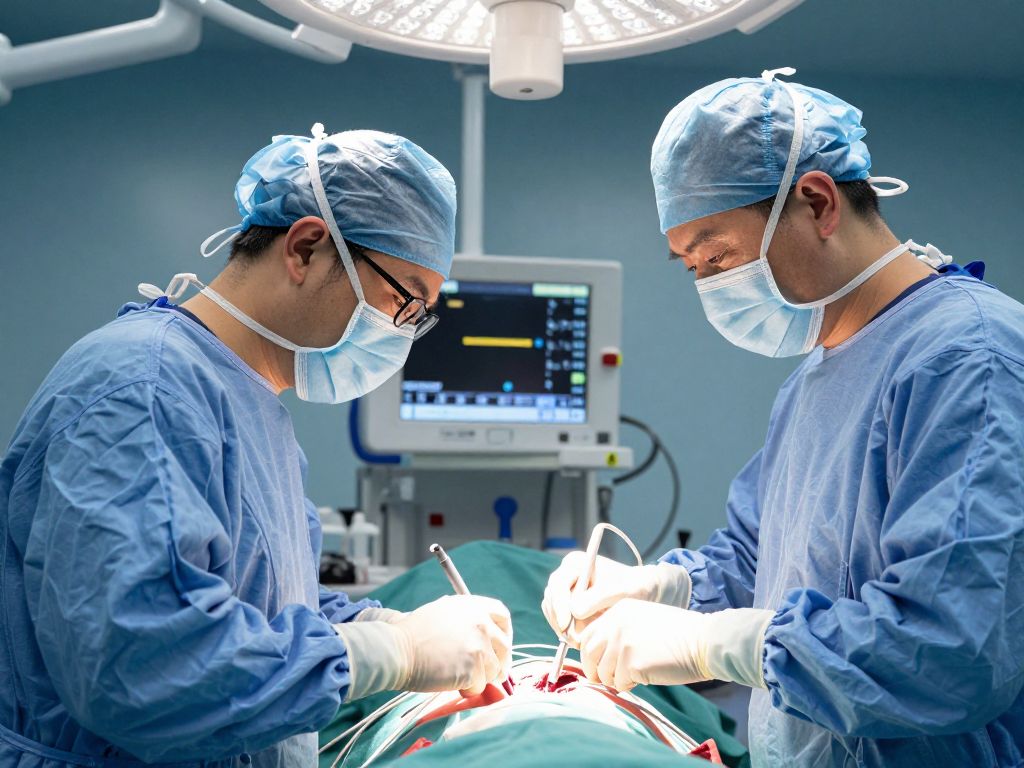
The intricate surgery, lasting more than 10 hours, involved four specialized surgical teams at the Hospital of the University of Pennsylvania. The teams meticulously worked to connect donor forearms and hands to Krizanac’s upper arms. This marks the first bilateral hand and forearm transplant at Penn Medicine since before the COVID pandemic, and the first in the U.S. since 2021. The procedure was the fifth such transplant performed by Penn’s vascularized composite allotransplantation team, directed by L. Scott Levin, MD, who is the Penn hand transplant program director, orthopaedic and plastic surgeon, and Chair Emeritus of the Department of Orthopaedic Surgery at Penn Medicine. He was joined by Benjamin Chang, MD, plastic surgeon and co-director of the program.
Krizanac’s journey to receiving new hands began in 2008 when, at 12 years old, an improperly treated infection led to severe sepsis and multi-organ failure, necessitating the amputation of parts of both his arms and legs to save his life. While prosthetic legs served him well, he faced significant limitations with prosthetic hands, which could not replicate the complex movements and sensations of real hands. He was evaluated by Dr. Levin and Dr. Chang in 2018, initiating a preparation process that typically spans about two years for such complex cases. Krizanac then moved to Philadelphia, waiting eight weeks on the national waiting list for a suitable donor, which involved matching blood and tissue types, as well as gender, skin color, and size.
One particularly significant aspect of Krizanac’s case is that his procedure was the first bilateral hand transplant performed in a patient with osseointegrated lower extremity prosthetics, meaning his leg prostheses are surgically implanted directly into his residual limbs. This unique combination adds another layer to the historic nature of his transplant. The Penn team undertook extensive preparation, rehearsing Krizanac’s specific surgery more than 12 times in the cadaver lab to ensure optimal readiness.
Just six months after the transplant, Krizanac has shown remarkable progress, regaining abilities that were impossible before. He can now perform daily tasks such as typing on his iPhone, picking up food, holding a cup, and even pushing his glasses up the bridge of his nose. Doctors report that his nerves are healing well, and he is regaining sensation, allowing him to feel if something is soft or hard, hot or cold. He describes feeling “whole again” following the surgery. His recovery will continue with several hours of physical therapy per week over the next two to three years.
The Penn Hand Transplant Program, established in 2009 by Dr. L. Scott Levin and Abraham Shaked, is one of only a few such programs globally and is distinguished as one of the only transplant centers in the U.S. with the experience to perform bilateral hand transplants. The program exclusively performs bilateral transplants, focusing on patients who stand to gain the most significant improvements in quality of life. Penn Medicine has a rich history in this specialized field, having completed the most bilateral transplants in the United States and notably performing the world’s first bilateral hand transplant on a child in partnership with Children’s Hospital of Philadelphia in 2015. The program collaborates closely with the Gift of Life Donor Program, a nonprofit organization serving the eastern half of Pennsylvania, southern New Jersey, and Delaware, which was instrumental in coordinating the donor for Krizanac’s bilateral hand transplant.
While life-altering, hand transplantation remains a highly complex and largely experimental procedure. Recipients must commit to a lifetime regimen of immunosuppressant drugs to prevent the body from rejecting the new limbs. This medication carries potential side effects, including organ damage and a reduction in life expectancy. However, for many patients like Krizanac, the significant improvements in functionality, tactile sensation, and restoration of appearance, along with the profound psychological benefits of feeling whole again, make the inherent risks worthwhile.
Frequently Asked Questions (FAQ)
- What was the recent medical milestone achieved at Penn Medicine?
- Penn Medicine surgeons performed a historic double hand transplant on 29-year-old Luka Krizanac.
- When did Luka Krizanac’s double hand transplant surgery occur?
- The surgery took place in the fall of 2024.
- Who was the lead surgeon for the double hand transplant?
- The procedure was directed by L. Scott Levin, MD, Penn hand transplant program director, orthopaedic and plastic surgeon, and Chair Emeritus of the Department of Orthopaedic Surgery at Penn Medicine.
- What makes Luka Krizanac’s transplant particularly historic?
- His procedure was the first bilateral hand transplant performed in a patient with osseointegrated lower extremity prosthetics, meaning his leg prostheses are surgically implanted directly into his residual limbs.
- What is the current status of Luka Krizanac’s recovery?
- Six months after the transplant, he can perform daily tasks such as typing on his iPhone, picking up food, holding a cup, and pushing his glasses up. His nerves are healing, and he is regaining sensation. He will continue with several hours of physical therapy per week for the next two to three years.
- What is the Penn Hand Transplant Program?
- The Penn Hand Transplant Program, established in 2009 by Dr. L. Scott Levin and Abraham Shaked, is one of only a few such programs globally and is distinguished as one of the only transplant centers in the U.S. with the experience to perform bilateral hand transplants.
Key Features of the Historic Double Hand Transplant
| Feature | Description | Scope |
|---|---|---|
| Recipient | Luka Krizanac, 29-year-old from Zurich, Switzerland, who lost hands and legs at age 12 due to severe sepsis. | Individual |
| Procedure Type | Historic double hand and forearm transplant. | Local (Penn Medicine), Nationwide (U.S. since 2021) |
| Lead Surgeons | L. Scott Levin, MD (Director of Penn Hand Transplant Program); Benjamin Chang, MD (Co-director). | Local |
| Surgery Date | Fall 2024. | Local |
| Surgery Duration | More than 10 hours. | Local |
| Surgical Team Size | Four surgical teams, including attending surgeons, residents, fellows, and nurses. | Local |
| Unique Aspect | First bilateral hand transplant performed in a patient with osseointegrated lower extremity prosthetics. | Nationwide (U.S.) |
| Program History | Penn Hand Transplant Program established in 2009; completed the most bilateral transplants in the United States. | Local (Program), Nationwide (Transplant Count) |
| Recovery Progress (6 months post-op) | Ability to type on iPhone, pick up food, hold a cup, regain sensation, ongoing physical therapy for 2-3 years. | Individual |
| Donor Program Partner | Gift of Life Donor Program. | Regional (Eastern PA, Southern NJ, DE) |
Deeper Dive: News & Info About This Topic
HERE Resources