

News Summary
Veterinary medicine takes a giant leap forward with a pioneering canine brain surgery performed by Penn Vet and Penn Medicine utilizing advanced augmented reality technology. This innovative procedure enhances surgical precision and patient care, showcasing the successful collaboration between veterinary and human medical professionals. The application of AR allows for real-time visualization of complex anatomical structures during surgery, leading to improved outcomes for animal patients. The initiative underlines an evolving trend that integrates cutting-edge technology in veterinary practices.
Philadelphia
In a groundbreaking advancement for veterinary medicine, Penn Vet and Penn Medicine recently collaborated on a complex canine brain surgery utilizing cutting-edge augmented reality (AR) technology. The pioneering procedure, which represents a significant stride in surgical precision and patient care, took place on December 16, 2025. This innovative application of AR allowed the surgical team to achieve unprecedented levels of accuracy during the delicate operation, enhancing the safety and effectiveness of the intervention.
Enhanced Surgical Precision with Augmented Reality
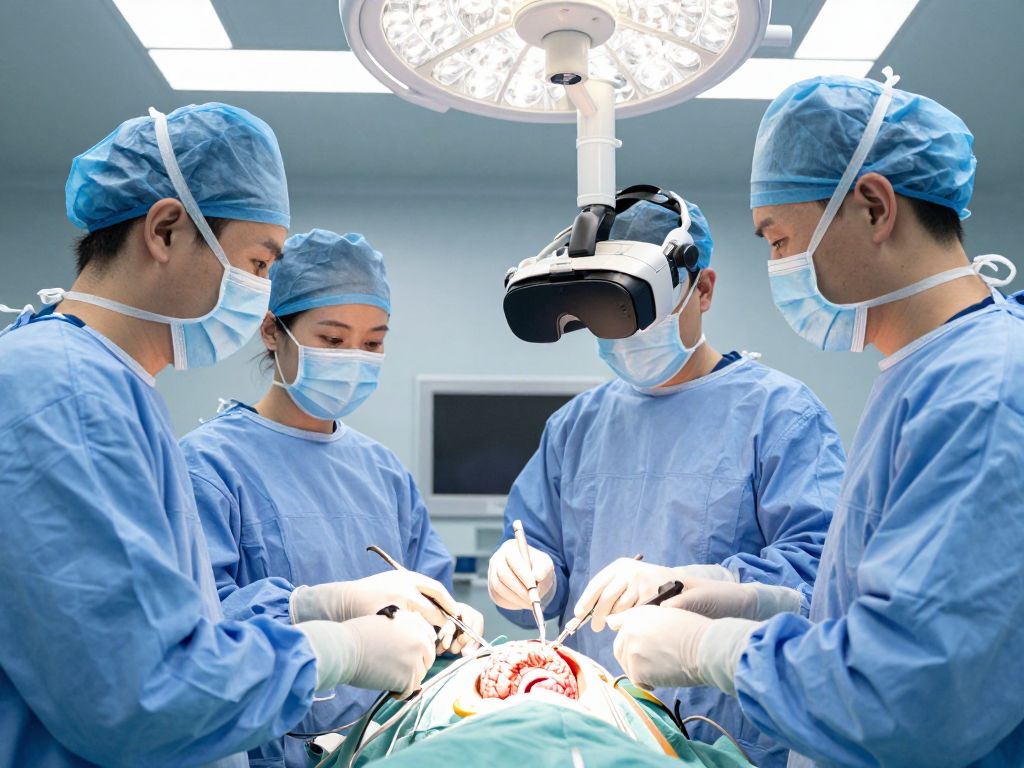
The use of augmented reality in the canine brain surgery provided the veterinary and medical teams with real-time, three-dimensional overlays of the patient’s anatomy directly within their field of vision. This allowed surgeons to visualize internal structures, such as blood vessels and critical brain regions, with remarkable clarity and precision throughout the procedure. The technology integrates digital information with the physical surgical environment, offering a dynamic and interactive guide during the operation. This capability is particularly beneficial in intricate surgeries like those involving the brain, where even minor deviations can have significant consequences.
The AR system likely involved specialized head-mounted displays or monitors that projected critical data, such as pre-operative scans (MRI or CT), onto the live surgical field. This overlay guided instrument placement and tissue manipulation, effectively turning complex anatomical data into an intuitive, real-time navigation system. Such technological integration aims to minimize invasiveness, reduce operative time, and improve surgical outcomes for animal patients. This type of interdisciplinary collaboration between veterinary and human medical experts, combining advanced technology, highlights a growing trend in both fields to leverage shared knowledge and tools for optimal patient care.
A Collaborative Effort for Advanced Animal Care
The successful execution of this canine brain surgery underscores the powerful synergy between Penn Vet and Penn Medicine. This partnership brings together specialized expertise in veterinary neurology, neurosurgery, and human medical technology, fostering an environment where innovative solutions can be developed and applied. Such collaborations are crucial for pushing the boundaries of what is possible in veterinary treatment, translating advancements from human medicine to benefit animal companions. The initiative demonstrates a commitment to utilizing the most advanced tools available to address complex medical conditions in animals, offering hope for pets facing challenging diagnoses.
The department of clinical sciences at Penn Vet, in conjunction with specialists from Penn Medicine, played a pivotal role in bringing this technology to the operating room for a canine patient. This joint effort not only resulted in a successful surgical outcome for the dog but also established a new precedent for the application of high-tech surgical methods in veterinary practice. It emphasizes that veterinary medicine continues to evolve, incorporating cutting-edge techniques and technologies to improve the health and well-being of animals.
Broader Implications for Veterinary and Human Medicine
The successful integration of augmented reality into canine brain surgery at the University of Pennsylvania could have far-reaching implications. It opens doors for similar applications in other complex veterinary procedures, potentially improving outcomes for a wide range of animal patients. Furthermore, the insights gained from using AR in this veterinary context could also contribute valuable data and experience that may further refine AR applications in human neurosurgery.
This achievement signals a future where advanced visualization technologies become a standard component of surgical planning and execution in both human and animal healthcare. It highlights the continuous evolution of medical science, driven by innovation, collaboration, and a dedication to improving the quality of life for all patients. The pioneering work at Penn Vet and Penn Medicine reinforces the University of Pennsylvania’s position at the forefront of medical and veterinary innovation.
Frequently Asked Questions
- What significant medical advancement recently occurred at Penn Vet?
- Penn Vet and Penn Medicine collaborated on a canine brain surgery using cutting-edge augmented reality technology.
- When did this groundbreaking surgery take place?
- The pioneering procedure took place on December 16, 2025.
- What technology was used in the canine brain surgery?
- Cutting-edge augmented reality (AR) technology was used in the canine brain surgery.
- What were the benefits of using augmented reality in the surgery?
- The use of augmented reality in the canine brain surgery provided the veterinary and medical teams with real-time, three-dimensional overlays of the patient’s anatomy directly within their field of vision, allowing surgeons to visualize internal structures with remarkable clarity and precision.
- Which institutions collaborated on this surgical innovation?
- Penn Vet and Penn Medicine collaborated on this surgical innovation.
Key Features of the Canine Brain Surgery
| Feature | Description |
|---|---|
| Procedure | Canine Brain Surgery |
| Technology Used | Cutting-Edge Augmented Reality (AR) |
| Collaborating Institutions | Penn Vet and Penn Medicine |
| Date of Procedure | December 16, 2025 |
| Key Benefit of AR | Enhanced surgical precision through real-time 3D anatomical overlays |
| Impact | Significant advancement in veterinary medicine and potential implications for human neurosurgery |
Deeper Dive: News & Info About This Topic
HERE Resources

Author: STAFF HERE PHILADELPHIA WRITER
The PHILADELPHIA STAFF WRITER represents the experienced team at HEREPhiladelphia.com, your go-to source for actionable local news and information in Philadelphia, Philadelphia County, and beyond. Specializing in "news you can use," we cover essential topics like product reviews for personal and business needs, local business directories, politics, real estate trends, neighborhood insights, and state news affecting the area—with deep expertise drawn from years of dedicated reporting and strong community input, including local press releases and business updates. We deliver top reporting on high-value events such as Mummers Parade, Philadelphia Flower Show, and Thanksgiving Day Parade. Our coverage extends to key organizations like the Greater Philadelphia Chamber of Commerce and United Way of Greater Philadelphia, plus leading businesses in telecommunications, food services, and healthcare that power the local economy such as Comcast, Aramark, and Children's Hospital of Philadelphia. As part of the broader HERE network, we provide comprehensive, credible insights into Pennsylvania's dynamic landscape.