

News Summary
At a recent panel at the University of Pennsylvania, experts emphasized the need for medical schools to integrate artificial intelligence (AI) into their educational programs. With only 14% of medical schools currently offering a formal AI curriculum, the panelists highlighted the urgency of developing comprehensive AI training to prepare future doctors for a tech-driven healthcare landscape. This integration not only enhances learning but also meets the growing demand for medical professionals skilled in AI, ultimately improving patient care and outcomes.
Philadelphia, PA – Medical Schools Urged to Rapidly Integrate AI into Curricula
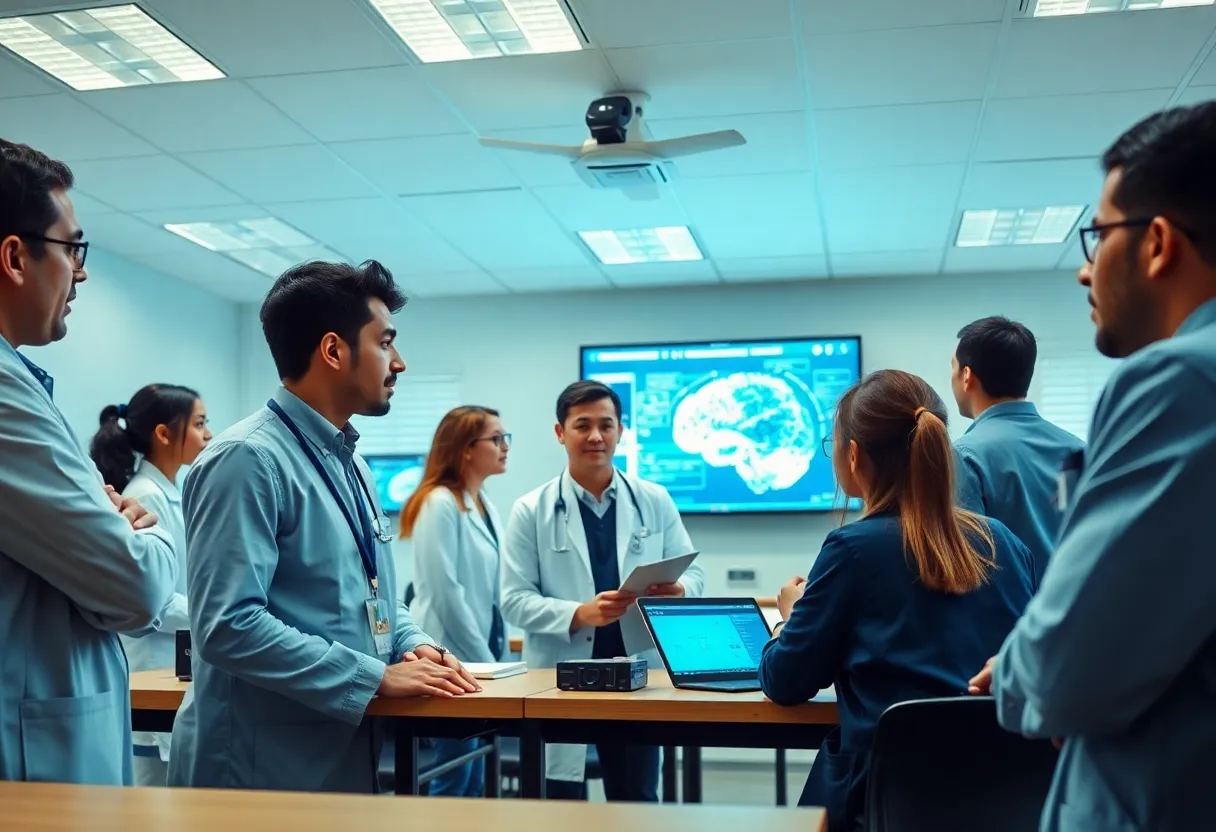
Experts at a recent University of Pennsylvania virtual panel emphasized the urgent need for medical schools to incorporate artificial intelligence (AI) into their educational programs. The panelists highlighted that AI is already transforming medical education, necessitating swift training for both students and faculty to ensure effective and ethical use.
Context for AI Integration
The rise of AI technologies is rapidly reshaping various sectors, including healthcare. Medical education stands at a crossroads, where failure to adapt could lead to inadequately prepared physicians. This imperative was underscored during a recent panel discussion at the University of Pennsylvania’s Perelman School of Medicine, which brought together experts from leading medical institutions to discuss the integration of AI into medical school curricula.
As healthcare evolves, the integration of AI into medical education not only enhances learning but also addresses the increasing demand for tech-savvy medical professionals. By incorporating AI training, medical schools can better prepare students to face the challenges of a modern healthcare landscape.
Panel Discussion Highlights
The panel, moderated by the Vice Dean for Undergraduate Medical Education at the Perelman School of Medicine, featured notable experts from Stanford University, Northwestern University, and NYU Grossman School of Medicine. The discussions focused on the urgent need for medical schools to adapt quickly and effectively to the evolving role of AI in healthcare.
Current State of AI in Medical Education
Despite the growing presence of AI in healthcare, the integration within medical education has been slow. A recent study revealed that only 14% of medical schools currently have a formal AI curriculum, compared to 60% of undergraduate programs. This stark gap highlights the necessity for medical institutions to accelerate their adoption of AI training, ensuring future physicians are well-prepared for an AI-enhanced healthcare environment.
Recommendations for Medical Schools
The panelists provided several actionable recommendations for medical schools aiming to incorporate AI into their curricula:
- Develop comprehensive AI training programs for students and faculty.
- Establish ethical guidelines for AI use in medical practice.
- Collaborate with technology experts to stay updated on advancements in AI.
- Integrate AI applications into clinical training to enhance decision-making skills.
Implementing these strategies allows medical schools to equip future healthcare professionals with the skills necessary to use AI effectively and responsibly.
Importance of AI in Healthcare
Integrating AI into medical education is essential. As AI technologies improve patient care and clinical outcomes, future physicians equipped with AI knowledge can significantly enhance healthcare delivery. By embracing AI in their training, medical students will be better positioned to meet the demands of modern healthcare and improve overall patient experiences.
Looking Ahead
The integration of AI into medical education is no longer optional but a critical necessity. Medical schools are urged to act swiftly to incorporate AI into their curricula to prepare students for the evolving landscape of healthcare. This proactive approach not only enhances academic outcomes but also benefits community health by ensuring well-prepared graduates who can leverage AI technologies to improve patient care.
| Feature | Description |
|---|---|
| Current State | Only 14% of medical schools have developed a formal AI curriculum. |
| Recommendations | Develop comprehensive AI training programs, establish ethical guidelines, collaborate with technology experts, and integrate AI into clinical training. |
| Importance | Equipping future physicians with AI skills is essential for improving patient care and outcomes. |
Conclusion
The integration of AI into medical education reflects a pivotal shift that promises to enhance both learning and patient care. By committing to these advancements, medical schools can better train their students to thrive in a healthcare environment that increasingly relies on technology. Engaging in this transformation will benefit not just physicians but the broader community they serve.
Frequently Asked Questions (FAQ)
What is the current state of AI integration in medical education?
A recent study found that only 14% of medical schools have developed a formal AI curriculum, compared to 60% of undergraduate programs.
What are the recommendations for medical schools regarding AI integration?
The panelists recommended that medical schools develop comprehensive AI training programs for students and faculty, establish ethical guidelines for AI use in medical practice, collaborate with technology experts to stay abreast of AI advancements, and integrate AI applications into clinical training to enhance decision-making skills.
Why is it important for medical schools to integrate AI into their curricula?
Integrating AI into medical education is critical to prepare future physicians for the evolving healthcare landscape, enabling them to leverage AI technologies to improve patient care and outcomes.
Deeper Dive: News & Info About This Topic
HERE Resources
Seattle’s Healthcare Landscape Transforms with New High-Rise Medical Facilities