

10 Essential Plants to Attract Pollinators to Your Philadelphia Garden
Transforming your Philadelphia garden into a haven for pollinators enhances both its beauty and ecological importance. Native plants are specifically adapted to local conditions, making them highly effective at attracting and sustaining pollinator populations. This comprehensive guide introduces ten key native plants that support bees, butterflies, hummingbirds, and other vital pollinators. Incorporating these plants into your landscape not only promotes biodiversity but also contributes to the health of local ecosystems.
1. Wild Bergamot (Monarda fistulosa)
Wild Bergamot, commonly known as bee balm, boasts vibrant pink and lavender flower clusters rich in nectar. Its aromatic foliage adds aesthetic appeal and can be used for herbal teas, providing a dual purpose. This perennial prefers full sun and well-drained soil, thriving with minimal maintenance. Its soft fragrance and nectar production attract a variety of pollinators, including bees, butterflies, and hummingbirds, making it a cornerstone for native gardens aiming to support pollinator diversity.
2. Purple Coneflower (Echinacea purpurea)
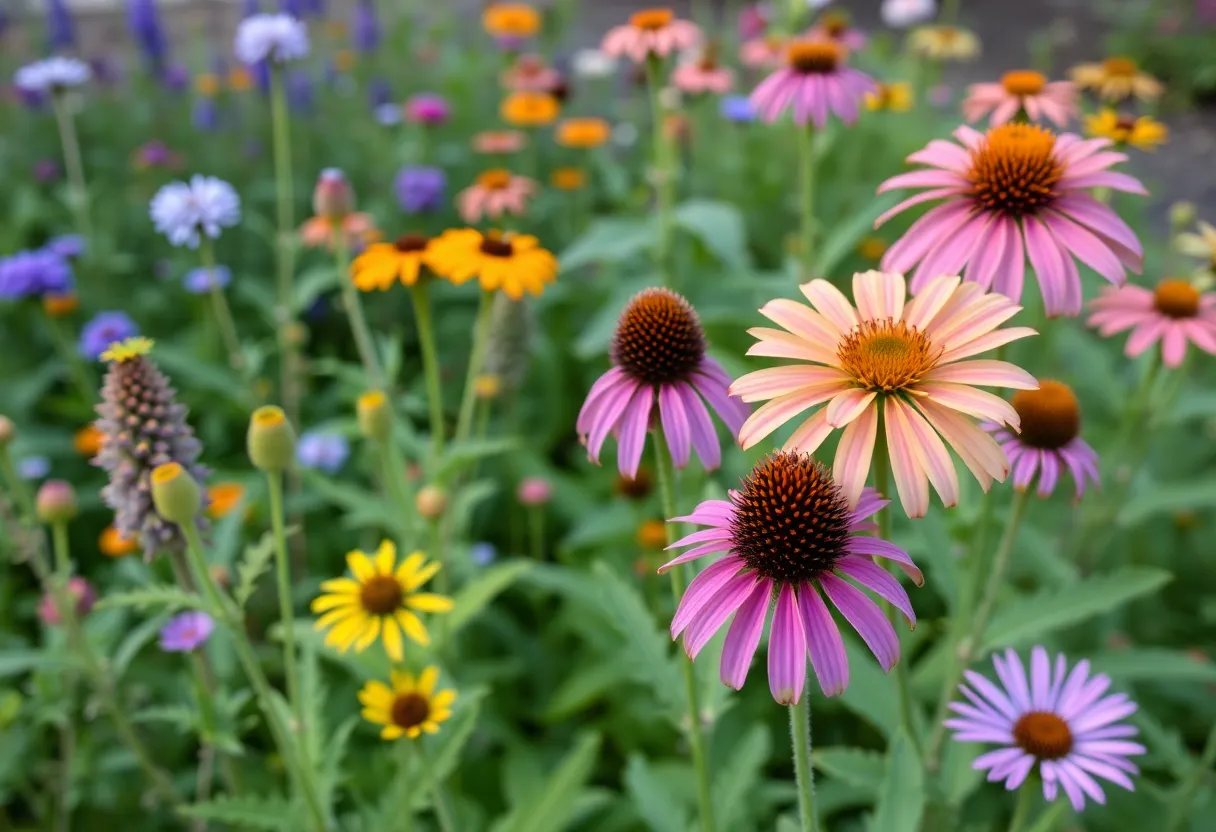
Purple Coneflower is a hardy perennial distinguished by its large, daisy-like blooms with raised central cones. Blooming from early summer to late fall, it serves as a crucial nectar source during peak pollinator activity. Its adaptability to diverse soil types and resilience to drought make it ideal for Philadelphia gardens. Beyond its ecological benefits, it is valued for its medicinal properties, notably in herbal remedies, emphasizing its role as both a pollinator attractant and culturally significant plant.
3. Butterfly Weed (Asclepias tuberosa)
Butterfly Weed is a tough, drought-tolerant perennial that produces vibrant orange flowers from June to August. Its tubular blooms provide essential nectar for butterflies and hummingbirds. Importantly, its leaves serve as a vital food source for monarch butterfly caterpillars, making it an integral part of the monarch migration and breeding cycle. Its ability to thrive in poor soils underscores its suitability for xeriscaping and conservation initiatives focused on supporting pollinator habitat.
4. Swamp Milkweed (Asclepias incarnata)
Swamp Milkweed features fragrant, pinkish flowers blooming in July and August, attracting a range of pollinators including bees, butterflies, and moths. Tolerant of both wet and dry conditions, it is particularly valuable in riparian or wetter landscape zones. Its role as a host plant for monarch larvae makes it essential in pollinator gardens aiming to bolster monarch populations. Its adaptability to varying moisture levels enhances its versatility across urban and suburban Philadelphia landscapes.
5. Blazing Star (Liatris spicata)
Blazing Star exhibits striking purple, plume-like flower spikes that draw in butterflies and other nectar-seeking insects. Preferring sunny and dry settings, it blooms from mid-summer into fall, providing sustained resources for late-season pollinators. Its vertical form adds architectural interest, and its ability to tolerate drought conditions makes it a sustainable choice for environmentally conscious gardens.
6. Culver’s Root (Veronicastrum virginicum)
Culver’s Root produces tall, elegant white spires that bloom in summer. It is notable for attracting pollinators during late-season activity, including moths and bees. Well-suited for moist, sunny to partly shaded areas, this perennial enhances garden diversity. Its adaptability to various soil conditions and its striking floral structure make it a valuable addition to native plant landscapes seeking continuous pollinator support through the seasons.
7. Buttonbush (Cephalanthus occidentalis)
Buttonbush earns its name from spherical flower clusters resembling pincushions, which produce nectar and pollen abundantly. Blooming throughout summer, it appeals to native bees, honeybees, butterflies, and moths. This multi-stemmed shrub grows 6 to 12 feet tall, thriving in wet soils often found near ponds or streams. Its large, rounded flowers are not only ecologically important but also visually distinctive, providing critical support for pollinator populations in wetland and urban landscapes alike.
8. Eastern Redbud (Cercis canadensis)
Eastern Redbud is a small, deciduous tree renowned for its early spring display of pink to purple flowers. These blooms are among the first nectar sources available to emerging pollinators. Its heart-shaped leaves and smooth bark add year-round visual interest. The early nectar provided by this tree supports pollinators emerging from dormancy, emphasizing its role in the seasonal cycle of Philadelphia’s native flora and fauna.
9. Coral Honeysuckle (Lonicera sempervirens)
Coral Honeysuckle is a native vine characterized by bromeliad-red or orange tubular flowers. Its blooms attract hummingbirds and butterflies, providing critical nectar sources during the summer months. Unlike invasive honeysuckles, this native species is less aggressive, making it suitable for covering trellises, fences, or ground cover. Its pollinator-friendly qualities enhance urban and suburban landscapes, creating corridors for bird and insect movement.
10. Wild Blue Phlox (Phlox divaricata)
Wild Blue Phlox is an easy-to-grow perennial that offers fragrant, blue-violet flowers from spring to early summer. It attracts an array of pollinators, including butterflies, bees, and moths. Its tolerance for drought and shade makes it an excellent choice for partial sun or moist shade locations. Its low-maintenance nature allows gardeners to establish pollinator-friendly areas with minimal effort, supporting biodiversity and ecosystem health.
Strategic Plant Selection for a Pollinator-Friendly Garden
Integrating these plants into your landscape creates a layered, year-round resource hub for pollinators. Prioritize native varieties that thrive in Philadelphia’s climate and soil conditions. Plant diverse species to ensure continuous pollen and nectar availability across seasons. Use a mix of flowers, shrubs, and trees to attract a wide range of pollابية and support their life cycles—from emergence to breeding and migration.
Benefits of Native Plants in Philadelphia
- Ecological Resilience: Native plants are well-adapted to local conditions, reducing water and fertilizer dependence.
- Biodiversity Support: Specific plants provide food and habitat for native pollinators, including bees, butterflies, and hummingbirds.
- Low Maintenance: Once established, native plants often require less watering, pruning, and pest control.
- Community Impact: Promoting native plant landscapes can improve local ecological health, supporting pollinator populations vital for agriculture and natural ecosystems.
Final Thoughts
Creating a pollinator-supportive Philadelphia garden hinges on selecting native, adaptable plants that serve as vital resources. By planting the species listed above, gardeners can foster a thriving ecosystem, contribute to pollinator conservation, and enjoy a vibrant, dynamic landscape. Thoughtful planning and plant selection can turn any urban or suburban space into a sanctuary for these essential creatures.
Frequently Asked Questions
Why are native plants important for local pollinators?
Native plants are well-adapted to local climates and soil. They provide the most suitable nectar, pollen, and habitat for native pollinators. This supports pollinator health, ensures natural pollination cycles, and maintains biodiversity in the region.
Which plants bloom early to support emerging pollinators in spring?
Plants like the Eastern Redbud and Wild Blue Phlox bloom early in the season, providing crucial nectar and pollen sources for pollinators emerging from dormancy.
How can I incorporate these native plants into my garden?
Choose a variety of native species suited to your site’s conditions. Incorporate a mix of flowering perennials, shrubs, and trees across different bloom times. Group plants for visual impact and pollinator accessibility. Ensure proper soil preparation and minimal use of chemicals to maximize success.
What maintenance do native pollinator plants require?
Native plants generally require minimal maintenance once established. They benefit from periodical watering during dry spells and occasional pruning to promote healthy growth. Avoid pesticides to protect pollinators and support diverse insect populations.
Pollinator Garden Feature Chart
| Plant | Primary Bloom Period | Key Pollinators Attracted | Sunlight Preference | Soil Conditions |
|---|---|---|---|---|
| Wild Bergamot | Summer | Bees, Butterflies, Hummingbirds | Full sun | Well-drained |
| Purple Coneflower | Summer to Fall | Bees, Butterflies | Full sun | Drought-tolerant |
| Butterfly Weed | June – August | Monarch Caterpillars, Butterflies | Full sun | Poor, dry soil |
| Swamp Milkweed | Summer | Monarchs, Bees, Butterflies | Moist to wet | Moist soil |
| Blazing Star | Mid-summer to Fall | Butterflies, Bees | Full sun | Drought-tolerant |
| Culver’s Root | Summer | Night Pollinators, Bees | Moist, full or partial sun | Well-drained |
| Buttonbush | Summer | Native Bees, Birds | Wet, full sun | Wet soils |
| Eastern Redbud | Early Spring | Emerging Pollinators | Full to partial sun | Well-drained |
| Coral Honeysuckle | Summer | Hummingbirds, Butterflies | Full sun | Well-drained | Wild Blue Phlox | Spring to Early Summer | Butterflies, Bees | Partial sun, moist shade | Moist, well-drained |